TLDR
Florida CRNAs average $190 per hour and $224,038 annually (RxRooster aggregated data), the lowest among the nine no-income-tax states. Florida requires physician supervision, which limits scope of practice and restricts the kinds of facilities that can hire CRNAs. The state's large Medicare population (driven by retirees) keeps per-case anesthesia revenue below the national average, which flows through to compensation. Florida's job volume is enormous — Miami, Tampa, Orlando, and Jacksonville all generate steady demand — but the combination of supervision requirement and lower-reimbursement payer mix makes Florida a more complicated financial choice than the no-tax status alone suggests.
Florida CRNAs average $190 per hour and $224,038 annually (RxRooster aggregated data). Florida requires physician supervision for CRNA practice — no full practice authority. The state's zero income tax is offset by the lowest CRNA hourly rate among no-tax states and a payer mix heavily weighted toward Medicare due to Florida's large retiree population.
A CRNA in The Villages walks into an ambulatory surgery center at 6:45 a.m. The case list for the day runs twelve procedures: seven cataracts, three colonoscopies, one hernia repair, and one pain management injection. Nine of the twelve patients are on Medicare. The facility bills its anesthesia revenue against the 2026 Medicare conversion factor of $20.50 per unit. A typical cataract case generates roughly $123 in anesthesia billing. A colonoscopy generates $144. The facility's gross revenue from the anesthesia portion of a full twelve-case day is less than $2,000. That number shapes what the facility can afford to pay her.
That arithmetic repeats across thousands of Florida ambulatory surgery centers every day. It is why Florida CRNA compensation looks different from California or Texas, even though the no-tax advantage is the same.

Florida CRNA Salary: The Gross and What Drives It
Florida CRNAs earn $190 per hour and $224,038 annually on average according to RxRooster aggregated data. The BLS national average for nurse anesthetists is $231,700 (2024). Florida trails that figure by roughly $7,700. Among the nine no-income-tax states, Florida ranks last in both hourly rate and annual pay. The no-tax advantage is real but smaller in Florida than elsewhere because the starting number is lower.
Three forces keep Florida compensation below the national mean. First, the payer mix is heavily weighted toward Medicare. Florida has the second-highest Medicare enrollment in the country after California, driven by its retiree population. Medicare pays $20.50 per anesthesia unit compared to a commercial average of $82.43. A facility with 60% Medicare cases generates significantly less per-case revenue than a facility with 60% commercial cases. The lower facility revenue flows through to CRNA compensation.
Second, the supervision requirement reduces the range of positions where a CRNA can practice at the top of her license. A CRNA who could run an independent practice in Colorado or Wyoming cannot structure the same arrangement in Florida. Every CRNA position in Florida requires a supervising physician anesthesiologist, which means every CRNA salary is set in the context of a care-team model rather than an independent model.
Third, Florida's large CRNA workforce creates labor competition that softens wages. The state has more than 5,000 practicing CRNAs according to AANA data, one of the largest state contingents in the country. Supply depth caps the upward pressure on rates that smaller markets (like Wyoming or South Dakota) experience.
Practice Authority: Supervision Required
Florida does not grant CRNAs full practice authority. The state requires physician supervision for every CRNA practice, meaning a CRNA must have a formal supervising relationship with a physician to provide anesthesia services. This is a defining feature of the Florida CRNA market. It shapes which facilities can hire CRNAs, how anesthesia teams are structured, and what a CRNA can charge.
The practical consequences are significant. Ambulatory surgery centers in Florida cannot operate with a single CRNA on site; they need an anesthesiologist present or available under the supervision requirement. Rural hospitals that might otherwise rely on a solo CRNA for coverage must maintain a physician relationship, often through contracts with regional anesthesia groups. Every CRNA case gets billed either personally by the anesthesiologist (modifier AA), as a medically directed case split between the physician and CRNA (QK/QX), or as a supervised case (QY/QX). The QZ modifier for independent CRNA practice does not apply in Florida.
Florida has active legislation to expand CRNA practice. The Florida Association of Nurse Anesthetists has lobbied for FPA for multiple legislative sessions. Bills have been introduced. None have passed. Florida's physician anesthesiologist lobby is well-funded and politically active, which has slowed FPA progress relative to states like Colorado (full opt-out 2023) or Massachusetts (full opt-out 2024). CRNAs who want independent practice currently relocate to FPA states. CRNAs who choose Florida are choosing the supervision model by default.
Where the Jobs Are: Florida Metro Markets
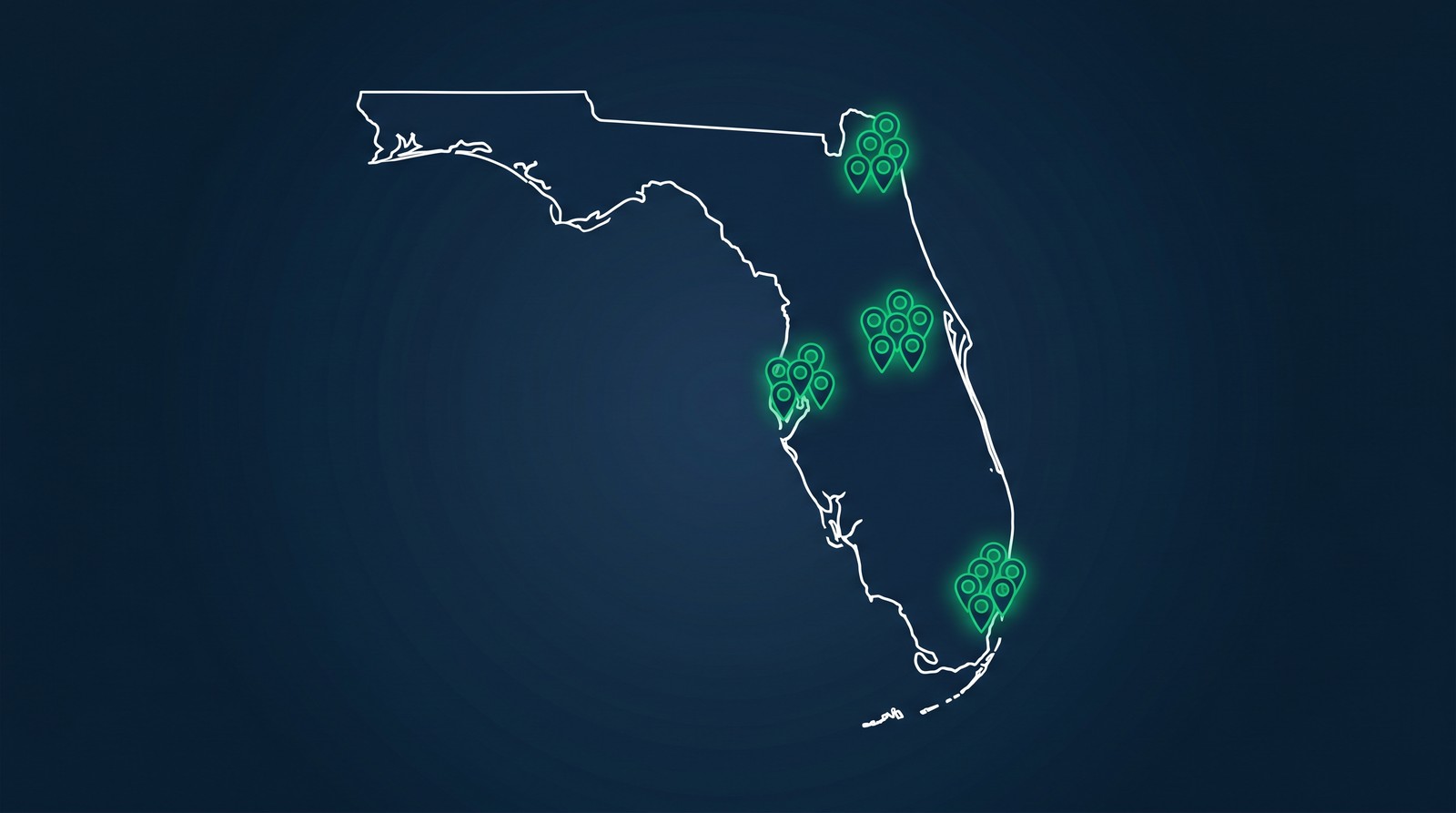
Four metro areas account for the majority of Florida CRNA positions: Miami, Tampa, Orlando, and Jacksonville.
Miami-Fort Lauderdale has the deepest CRNA job market in Florida. The metro's large hospital systems, growing ambulatory surgery network, and concentration of cardiac and transplant programs create demand across every subspecialty. Miami pays at or slightly above the state average, with premiums for cardiac and trauma subspecialties. Cost of living is the highest in Florida, which offsets the pay advantage for CRNAs considering Miami from lower-cost regions.
Tampa-St. Petersburg offers a strong mix of academic medicine (USF Health) and large community hospital systems. The Tampa market has been growing steadily as the population has shifted from the Northeast to central Florida's west coast. Rates cluster around the state average. Cost of living is moderate, producing a net financial profile better than Miami's.
Orlando is the fastest-growing metro in Florida by population. Orlando Health, AdventHealth, and a growing ambulatory network serve both the local population and a steady flow of medical tourism tied to theme park and convention traffic. CRNA demand is consistently high. Rates match the state average. Orlando's cost of living sits between Miami's and the state average.
Jacksonville rounds out the big-four metros with the most affordable housing market of the group. Jacksonville's hospital systems (Mayo Clinic Florida, Baptist Health, UF Health) anchor the CRNA job market. Rates run slightly below the state average. Cost of living is low for a major metro. For CRNAs prioritizing net financial outcome over location prestige, Jacksonville often produces the strongest numbers in Florida.
Beyond the big four, secondary markets in Gainesville, Sarasota, Naples, Pensacola, and Tallahassee provide smaller but stable CRNA opportunities. Rural Florida (the panhandle, the agricultural interior) has acute anesthesia coverage needs but lower compensation, often supplemented by facility stipends to close the gap.
Locum Rates in Florida
Locum CRNA rates in Florida run $220 to $270 per hour, 10% to 35% above the national locum average of $200 per hour. The premium reflects Florida's hurricane-related coverage surges, seasonal population swings (winter snowbird season increases surgical volume), and the consistent need for bridge coverage in a state with many small ambulatory surgery centers.
A locum CRNA working 40 weeks in Florida at $245 per hour, 40 hours per week, grosses $392,000. After zero state income tax, the full amount stays. The same 40 weeks in California at $275 per hour grosses $440,000, but California's 9.3% state tax drops the net to roughly $399,000. Florida's lower gross produces a comparable net. Housing and cost of living comparison then determines which state produces the better financial outcome.
Locum work in Florida carries one unique consideration. The supervision requirement means locum CRNAs must confirm the supervision structure at each assignment. A locum CRNA arriving at a rural facility expecting a light supervision arrangement may find a stricter medical direction structure, or vice versa. Contracts should specify the anesthesia team composition and the CRNA's expected scope of responsibilities.
What Florida CRNAs Should Evaluate
The six-factor evaluation framework applies with three Florida-specific additions.
First, ask what the supervision relationship actually looks like. The legal requirement for physician supervision creates a spectrum of arrangements in practice. Some facilities have an anesthesiologist on site for every case. Others have a single anesthesiologist providing medical direction across multiple ORs. Some have a remote supervising physician available by phone. The day-to-day experience varies enormously. A CRNA accepting a Florida position should confirm the supervision structure before signing.
Second, evaluate the payer mix. A Florida facility with 30% commercial, 60% Medicare, and 10% Medicaid generates significantly less per-case revenue than a Florida facility with 60% commercial, 30% Medicare, and 10% Medicaid. The facility's financial health affects compensation sustainability and stipend likelihood. Ask for payer mix data or approximate percentages during the evaluation.
Third, consider hurricane contingency. Florida is subject to annual hurricane disruption from June through November. CRNAs in coastal markets should understand what the facility's hurricane protocol looks like, whether contracts include storm-day pay, and whether travel risk falls on the provider or the facility during mandatory evacuations.
Related resources: Florida CRNA salary data, CRNA jobs in Florida, No-income-tax states comparison, Texas CRNA guide, California CRNA guide.
Browse Florida CRNA jobs on RxRooster. Every rate visible, every credential verified, no recruiter required.
Frequently Asked Questions
What is the average CRNA salary in Florida?
Florida CRNAs average $190 per hour and $224,038 annually according to RxRooster aggregated data, the lowest among the nine no-income-tax states. Three forces keep Florida compensation below the national mean: a payer mix heavily weighted toward Medicare (the second-largest Medicare population in the country), a physician supervision requirement that limits the range of CRNA positions, and a large CRNA workforce that creates labor market competition.
Does Florida have full practice authority for CRNAs?
Florida does not grant CRNAs full practice authority. The state requires physician supervision for every CRNA practice. This shapes which facilities can hire CRNAs, how anesthesia teams are structured, and what billing modifiers apply. The QZ modifier for independent CRNA practice does not apply in Florida because no Florida CRNA practices independently. Florida legislation to expand CRNA practice has been introduced multiple times but has not passed.
Where are the most CRNA jobs in Florida?
Four metro areas drive the majority of Florida CRNA demand: Miami-Fort Lauderdale (deepest market, highest cost of living), Tampa-St. Petersburg (strong academic plus community mix), Orlando (fastest-growing by population), and Jacksonville (most affordable housing, best net-pay profile). Secondary markets in Gainesville, Sarasota, Naples, Pensacola, and Tallahassee provide smaller but stable opportunities.
How does Florida CRNA pay compare to other no-income-tax states?
Florida ranks last among the nine no-tax states in both hourly rate ($190) and annual pay ($224,038). Wyoming ($432,640), Nevada ($309,500), Alaska ($303,667), Washington ($290,129), and Texas ($284,445) all offer higher annual compensation. South Dakota ($242/hr) and Tennessee ($188/hr) pay comparable or higher hourly rates. The no-tax advantage helps in Florida but from a lower starting point, so the net outcome trails the top-tier no-tax states.
Are locum CRNA rates good in Florida?
Florida locum rates run $220 to $270 per hour, 10% to 35% above the $200 national average. Premiums reflect hurricane-related coverage surges, winter snowbird season surgical demand, and consistent bridge coverage needs at small ambulatory surgery centers. A 40-week locum assignment at $245 per hour grosses $392,000 with no state income tax owed. Locum CRNAs should confirm the supervision structure at each assignment before signing.