TLDR
Payer-driven reimbursement discrimination means paying CRNAs less than physician anesthesiologists for identical anesthesia services. UnitedHealthcare cut CRNA reimbursement under the QZ modifier by 15% in October 2025, capping it at 85% of the physician rate. The Affordable Care Act's Section 2706(a) explicitly prohibits this kind of licensure-based discrimination by commercial payers, but enforcement has been minimal. The AANA has filed suit to compel HHS to enforce the provision. Ohio passed a state-level antidiscrimination law (HB 96) effective September 30, 2025. The fight for equal pay for equal anesthesia work will dominate CRNA advocacy through 2026 and beyond.
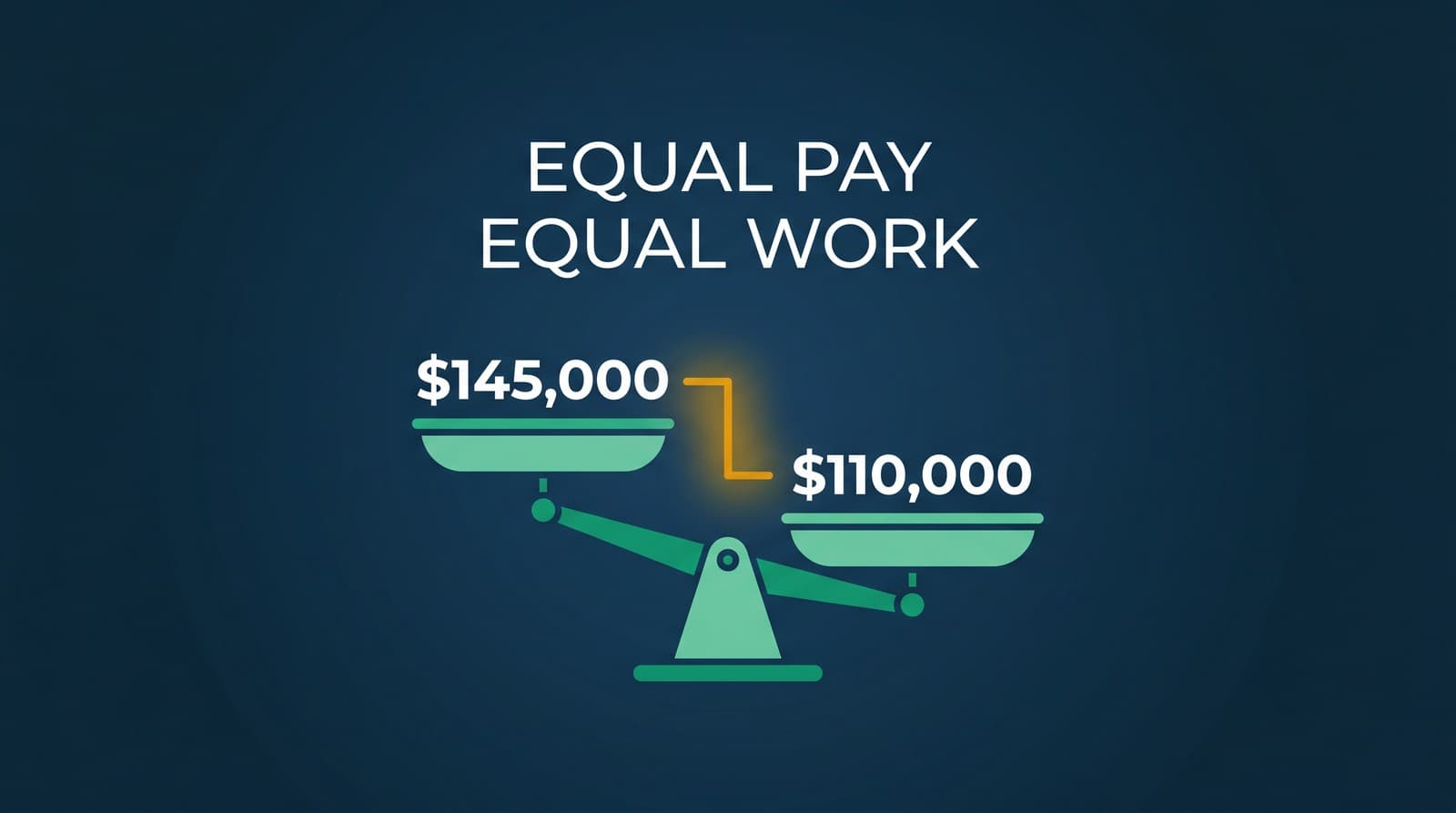
Payer-driven reimbursement discrimination means commercial insurance companies paying CRNAs a smaller percentage of the allowed rate than they pay physician anesthesiologists for identical anesthesia services. The practice accelerated in October 2025 when UnitedHealthcare reduced CRNA QZ-modifier payments by 15%, capping reimbursement at 85% of the physician rate. The Affordable Care Act prohibits this under Section 2706(a). Enforcement is the unresolved question.
A CRNA in Akron completes a total knee arthroscopy at a community hospital on a Tuesday morning. The anesthesia case is billed with the QZ modifier, indicating she provided the service independently without physician medical direction. The commercial insurance on file is a UnitedHealthcare plan. Before October 2025, that case paid the same as if a physician anesthesiologist had performed it. After October 2025, the same case at the same facility for the same patient pays 15% less. The work did not change. The skill did not change. The outcome did not change. Only the provider's license did.
That is the clearest possible description of reimbursement discrimination, and it is the reason more than a thousand CRNAs are flying to Washington this week.

What the Law Actually Says
Section 2706(a) of the Affordable Care Act, passed in 2010, prohibits commercial health plans from discriminating against providers based on their licensure when those providers are acting within the scope of their practice. The statute reads in part that a health plan "shall not discriminate with respect to participation under the plan or coverage against any health care provider who is acting within the scope of that provider's license or certification under applicable State law."
The plain reading is unambiguous. If a CRNA licensed in Ohio provides an anesthesia service within the scope of her Ohio license, and a physician anesthesiologist in Ohio provides the same anesthesia service within the scope of his Ohio license, a commercial insurance plan cannot pay one of them less than the other based solely on which license they hold. Fifteen years after the law passed, that outcome is not the reality for most CRNAs.
The reason is enforcement. Section 2706(a) depends on HHS to establish regulations and enforce compliance. HHS has not issued binding regulations. Commercial payers have interpreted the silence as permission. The AANA has asked federal courts to compel HHS to act.
The UnitedHealthcare Policy
On October 1, 2025, UnitedHealthcare implemented a set of anesthesia reimbursement changes that the AANA has called unlawful and discriminatory.
The headline change: CRNA reimbursement under the QZ modifier dropped from 100% to 85% of the physician fee schedule. The QZ modifier indicates that a CRNA performed the anesthesia service independently, without physician medical direction. A CRNA working independently does the entire case. She places the lines. She induces anesthesia. She manages intraoperative vital signs. She emerges the patient. She transfers care to PACU. In states with full practice authority, she does all of this without any physician anesthesiologist involvement. The outcome is indistinguishable from a case performed by a physician anesthesiologist. UHC now pays her 15% less for it.
UHC also eliminated reimbursement for two categories of units that had been standard in anesthesia billing: physical status modifiers 3, 4, and 5 (which adjust payment based on patient severity) and qualifying circumstances codes 99100, 99116, 99135, and 99140 (age, hypothermia, hypotension, and emergency). These eliminations apply to all anesthesia providers, not only CRNAs, but the QZ-specific 15% cut is narrowly targeted at CRNAs practicing independently.
Seven states are exempt from the QZ cut: Arkansas, California, Colorado, Hawaii, Massachusetts, New Hampshire, and Wyoming. In those states, state law or political pressure has forced UHC to maintain the 100% rate. The other 43 states absorbed the cut.
Why Discrimination Is the Correct Word
The AANA's argument is not that CRNAs should be paid the same as physicians for all services. CRNAs and physician anesthesiologists perform different roles in different settings, and reasonable differences in compensation follow from those differences. The argument is specific: when a CRNA performs the same service as a physician anesthesiologist, with the same outcome, under the same billing code, a commercial payer cannot pay her less based on her license type.
The evidence for equivalent outcomes is extensive. A systematic review in the Cochrane Database of Systematic Reviews found no difference in patient outcomes between CRNA-delivered and physician-delivered anesthesia. The GAO has reached similar conclusions. The Department of Veterans Affairs has granted CRNAs full practice authority in its facilities based on the same evidence. Thirty-one states and D.C. grant CRNAs full practice authority because the clinical case is settled.
The economic case against discrimination is also clear. CRNAs deliver more than 80% of anesthesia in rural America. Paying them less than physicians for identical work creates financial pressure that can force rural facilities to close service lines when they cannot recruit or retain CRNAs at artificially suppressed rates. The patients most affected by a commercial insurance policy that reduces CRNA reimbursement are the patients in rural communities where CRNAs are the only anesthesia providers available.

The AANA Lawsuit
The American Association of Nurse Anesthesiology filed a petition for a writ of mandamus in the U.S. District Court for the Northern District of Ohio, asking the court to compel the Secretary of Health and Human Services to enforce Section 2706(a) against commercial insurance plans. The petition argued that HHS has failed its statutory duty to issue regulations that give Section 2706(a) teeth.
On August 26, 2025, the court granted HHS's motion to dismiss the petition. On September 11, 2025, the AANA filed a notice of appeal. The appeal argues that the district court misread the mandamus standard and that HHS's decades of inaction amount to a constructive refusal to enforce a statute Congress expressly passed for this purpose.
The appeal will take months to resolve. While it moves through the courts, every CRNA billing a UHC plan under the QZ modifier absorbs the 15% reduction. A CRNA performing 1,200 cases a year with a 40% UHC payer mix loses roughly $30,000 to $50,000 in annual revenue to this single policy change, depending on rate and case complexity.
State-Level Action Is Moving Faster
Ohio House Bill 96, signed into law in 2025 and effective September 30, 2025, requires commercial health plans operating in Ohio to pay CRNAs at the same reimbursement rate as physician anesthesiologists for performing the same service. The Ohio law is the first state-level statute to directly implement the principle that Section 2706(a) articulates at the federal level.
Ohio passed HB 96 because state legislators heard from CRNAs, facility administrators, and rural hospital advocates that the UHC policy would harm patient access in Ohio's rural communities. The Ohio legislature acted. Other states are watching. California, Colorado, Hawaii, Massachusetts, New Hampshire, Wyoming, and Arkansas already had state-level protections that exempted them from the UHC cut. Ohio joined that list by statute rather than by UHC's voluntary carve-out.
State-level antidiscrimination laws may emerge as the faster path to enforcement than the federal courts. The AANA's Mid-Year Assembly will coordinate advocacy in state capitals as well as in Washington. CRNAs who cannot travel to DC can often drive to their state capital and meet with state legislators who move bills faster than Congress does.
What Individual CRNAs Can Do
The AANA Mid-Year Assembly begins April 24, 2026 in Washington, DC. CRNAs attending will make the case for federal legislation that mandates Section 2706(a) enforcement and for state-level laws modeled on Ohio HB 96. CRNAs who cannot attend can participate remotely by contacting their federal and state legislators during assembly week, when coordinated visits concentrate legislator attention on CRNA issues.
Beyond advocacy, individual CRNAs can document the specific financial impact of payer discrimination on their practices. A CRNA who can show a legislator or reporter that the UHC cut reduced her annual revenue by a specific dollar amount at a specific facility has made the case more effectively than any general statistic. The specificity of the harm is what moves legislation.
CRNAs should also understand what their contracts actually pay. Many facility employment contracts include billing language that can shift the financial impact of payer cuts between the CRNA, the facility, and the staffing agency. Reviewing contracts with knowledge of the UHC policy and its exemptions can reveal negotiating room that was not visible before October 2025.
Related resources: How much does a CRNA bill per case?, AANA Mid-Year Assembly 2026, Full practice authority states, The case for CRNA independence, Rural anesthesia recruitment.
See CRNA rates across all 50 states on RxRooster. Every rate visible, every credential verified.
Frequently Asked Questions
What is payer-driven reimbursement discrimination?
Payer-driven reimbursement discrimination means commercial insurance companies paying CRNAs a smaller percentage of the allowed rate than they pay physician anesthesiologists for identical anesthesia services. UnitedHealthcare's October 2025 policy cut CRNA QZ-modifier reimbursement by 15%, capping payment at 85% of the physician fee schedule. The ACA's Section 2706(a) prohibits this kind of licensure-based discrimination by commercial payers.
What does ACA Section 2706(a) require?
Section 2706(a) of the Affordable Care Act, passed in 2010, prohibits commercial health plans from discriminating against providers based on licensure when those providers are acting within the scope of their practice. The provision applies to CRNAs, nurse practitioners, physician assistants, and other licensed providers whose services overlap with physician-delivered services. Enforcement depends on HHS issuing regulations and compelling compliance. HHS has not issued binding regulations, and the AANA has sued to force enforcement.
Which states are exempt from the UnitedHealthcare CRNA cut?
Seven states are exempt from UnitedHealthcare's 15% QZ-modifier reduction: Arkansas, California, Colorado, Hawaii, Massachusetts, New Hampshire, and Wyoming. State-level legal protections or regulatory pressure prevented UHC from implementing the cut in those markets. Ohio became the first state to pass a specific antidiscrimination statute (HB 96, effective September 30, 2025) requiring equal reimbursement for CRNAs and physician anesthesiologists.
What is the AANA doing about payer discrimination?
The American Association of Nurse Anesthesiology filed a petition for a writ of mandamus in the U.S. District Court for the Northern District of Ohio, asking the court to compel HHS to enforce Section 2706(a). The court granted HHS's motion to dismiss on August 26, 2025. The AANA filed a notice of appeal on September 11, 2025. The appeal is pending. The AANA is also coordinating state-level advocacy and working with Congress on federal legislation to require Section 2706(a) enforcement.
How much do CRNAs lose to the UHC reimbursement cut?
A CRNA performing 1,200 anesthesia cases per year with a 40% UnitedHealthcare payer mix loses approximately $30,000 to $50,000 in annual revenue to the 15% QZ cut, depending on case complexity and local rates. The cut also reduces the financial case for rural and critical access hospitals that depend on CRNAs for coverage, potentially accelerating service line closures in communities where CRNAs are the only anesthesia providers.